
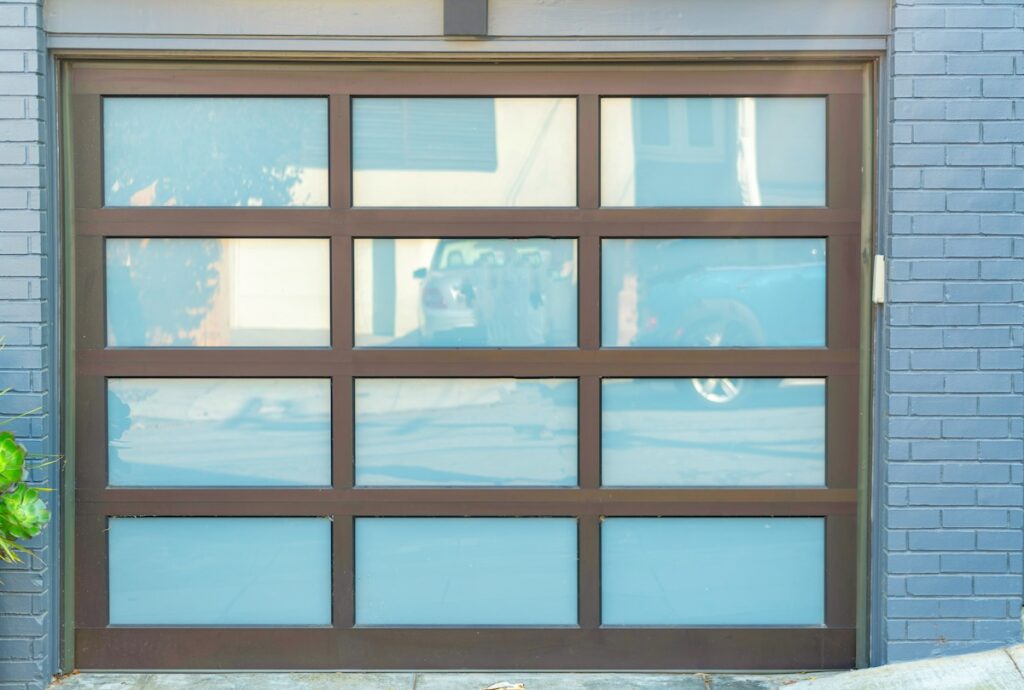
Garage Doors Without Tracks
Trackless garage doors are an incredible development in the industry. Home and business owners are prioritizing space, savings, clean aesthetics, and noise reduction. Why wouldn’t they? Makes sense to us. Thankfully, these desires have brought about a change that traditional doors can’t match.
We aren’t just seeing trackless replace existing garage doors in the Denver area, but we also see them impacting barndominium construction, leading to more open spaces and access to the outside.
Now, before you go and decide that a trackless system is right for your home, it’s really important that you understand what they are, how they work, and how they’ll fit into your current setup.
What Is a Trackless Garage Door?
A trackless garage door, simply put, is a modern system that removes overhead ceiling tracks from the equation. Instead of using the normal horizontal rails with rollers that slide along, these new systems typically use side-mounted lifting mechanisms, folding panels for vertical stacking, and counterweighted overlap designs (the most popular one being the Italian-engineered Delta Overlap system).
Since these systems don’t have ceiling tracks, it leaves the entire ceiling area open for storage, decoration, or anything else you might want. In fact, many of these trackless systems will also integrate the motor inside the upper beam of the door frame, which eliminates the display of bulky hardware.
Here are some examples of what we’re talking about. Compact™ folding doors fold panel-by-panel above the door opening. VertiStack Clear stacks sections vertically with no tracks or hinges. Delta Overlap is a counterweighted, trackless, high-end Italian system used in luxury garages and living-space conversions. All of these result in clean, modern garage spaces with smooth garage door motion, few (or zero) exposed components, and greater creative freedom.
Advantages of Trackless Garage Doors
1. No Ceiling Tracks = Maximum Overhead Space
Without rails and hardware filling up your overhead space, you can use the entire height of your ceiling, which leaves you free to use that newfound storage for racks, lighting, HVAC systems, car lifts, decorative displays, and anything else you can think of. This is perhaps the biggest reason that you see trackless systems used in luxury car galleries and dealerships. Modern residential builds are just now catching on.
2. Modern, Clean Aesthetics
Trackless doors remove the clutter of exposed hinges, rails, runs, and motors. It creates a sleek, minimalist look that’s especially valuable when you have a finished garage, your garage is also your gym or office, you use your garage to display a vehicle collection, or you just want an architectural look.
3. Quieter Operation
Traditional systems rely on chains and moving parts such as rollers that slide along metal tracks. With a trackless system, there are fewer moving components, which results in a lot less noise.
4. Smart-Home Integration
Most trackless systems come with advanced features including app-based remote control, voice-assistant connection, built-in security features, auto-locking, and much more.
5. Lower Maintenance
Trackless systems don’t have balancing springs or long sections of track. There are fewer friction points. Because of this, trackless systems often require a lot less maintenance than traditional setups.
Disadvantages of Trackless Garage Doors
Despite the great strides we’ve made in this area, trackless garage door systems aren’t perfect. They have some drawbacks that you should consider before driving in. The most important is probably the cost. Traditional setups with standard tracks and a traditional opener will typically range from $300 to $600. However, a trackless system will fall somewhere between $1500 and $3000 depending on what brand, features, and installation requirements you want/have.
On top of that, compatibility can sometimes become and issue. Not every garage door works on a trackless system. For example, overlap doors can’t pair with every trackless motor. Certain materials weigh so much that a trackless motor might not be able to support it. Custom windows can also weigh tons and present problems.
Another thing to consider is that trackless systems are virtually impossible to DIY repairs. They have so many specialized components and so much technical engineering that repairs tend to require a technician who is specifically trained for trackless, and parts that come directly from the source.
Finally, since trackless systems are still fairly new, there is limited availability in the US. This can mean longer wait times. Most of the systems are manufactured overseas (especially in Italy), which impacts shipping times, production schedules, and, consequently, installation and replacement wait times.
Is a Trackless Garage Door Affordable for Residential Use?
The answer to this question is a complicated “Yes.” Your goals matter, because trackless garage doors are not the cheapest option. Usually, homeowners who are turning their garage into living or display areas are the ones choosing trackless. We most often see these systems going into high-end custom homes where aesthetics take priority over function.
What’s the Best Garage Door Opener for Your Home?
If you want maximum ceiling space, luxury aesthetics, quiet operation, and low-maintenance, then a trackless garage door opening is the best fit for you.
However, if you want the most affordable thing on the market, easy repairs, compatibility with any door type, and reliability that’s been proven by time, a traditional opener is the better choice.